Across the vast landscape of Indian textile heritage, few art forms match the resilience, precision, and historical depth of Rogan painting. Rooted in the ancient trade corridors of Kutch, Gujarat, this drying-oil art form relies on transforming raw castor oil into flexible, thread-like paint applied directly by hand. Today, Dr. Ashish Kansara of Madhapar, Bhuj, stands as a central figure in this living legacy—representing the world’s only Hindu Rogan art master lineage actively practicing, preserving, and institutionalizing this craft.
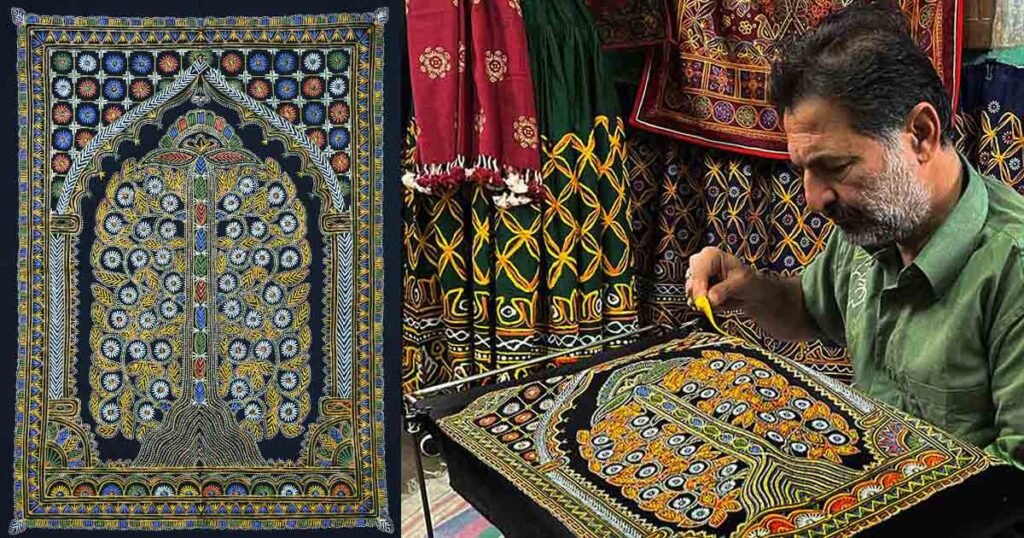
The Rogan Crafting Process: From Raw Seed Oil to Fine Canvas
Rogan painting is an exacting art of physical control, raw material balance, and hand-eye coordination. Unlike standard fluid fabric painting, the Rogan technique follows an uncompromising traditional preparation:
- Oil Reduction & Polymerization: Natural castor oil is simmered over open fires for up to 12 hours until it undergoes a thick chemical transformation, yielding a viscous, rubbery resin.
- Pigment Blending: Pure ground mineral and organic pigments are worked into the warm paste matrix to produce deep, light-fast colors.
- Stylus-Guided Air Trailing: The master artisan takes a small portion of the prepared oil paste, uses hand heat to bring it to working elasticity, and uses a smooth metal stylus to draw out delicate strands of paint. The tool floats above the fabric, guiding paint threads without touching the cloth.
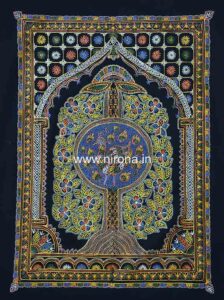
- Symmetrical Mirroring: In traditional compositions, the canvas is carefully folded while the paint is wet, creating perfect symmetrical transfers for iconic designs like the Tree of Life.
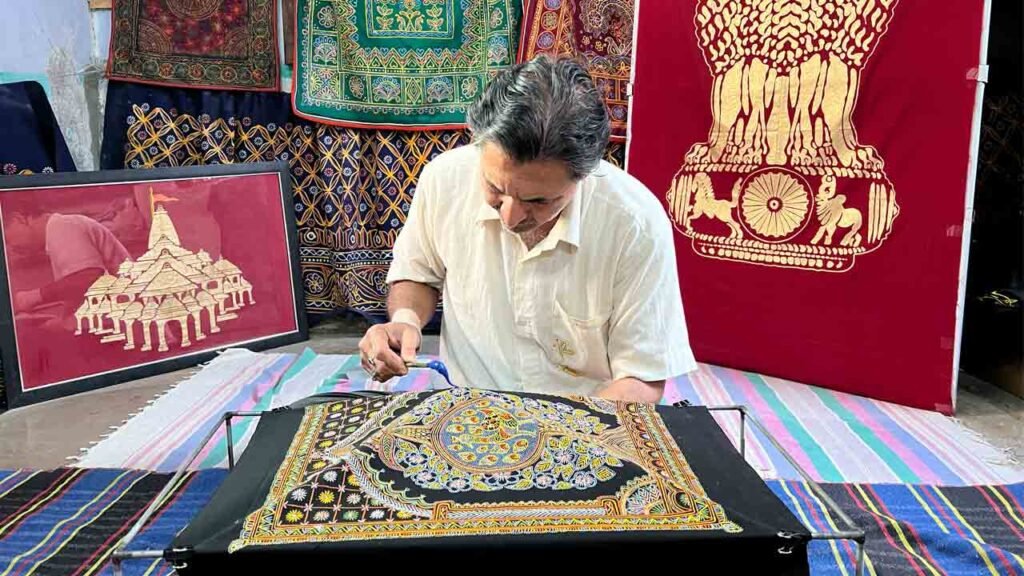
The Three Pillars of Kansara Family Rogan Artistry
Dr. Ashish Kansara maintains the entire spectrum of historical Rogan technical applications:
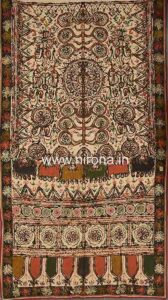
- Rogan Chhap: The cornerstone freehand technique reserved for complex floral lattices, peacock borders, and classical compositions.
- Nirmika Rogan Chhap: The historic method using hand-carved brass stamps to impress raised Rogan motifs onto woven textiles.
- Varnika Rogan Chhap: An elaborate decorative style featuring multi-layered color applications, natural mica (abrakh) highlights, and metallic accents.
Deep Antiquity: The 1,550-Year Continuity Of Rogan
Historical records in India trace Rogan art back approximately 1,550 years, linking its drying-oil origins to early Buddhist monastic art along ancient Central Asian trade routes. This historic timeline gained scientific validation in 2008 when chemical testing (gas chromatography-mass spectrometry) on 5th–6th century CE Buddhist cave murals in Bamiyan, Afghanistan, confirmed the presence of drying oils. This milestone proved that oil-based painting existed in the Indian cultural sphere long before its formal adoption in medieval Europe, framing Kutch Rogan art as the direct, surviving Hindu branch of this ancient tradition.
Official Recognition and Master Certification
Dr. Ashish Kansara’s lifetime dedication to safeguarding his family’s heritage has earned prestigious academic and state recognition:
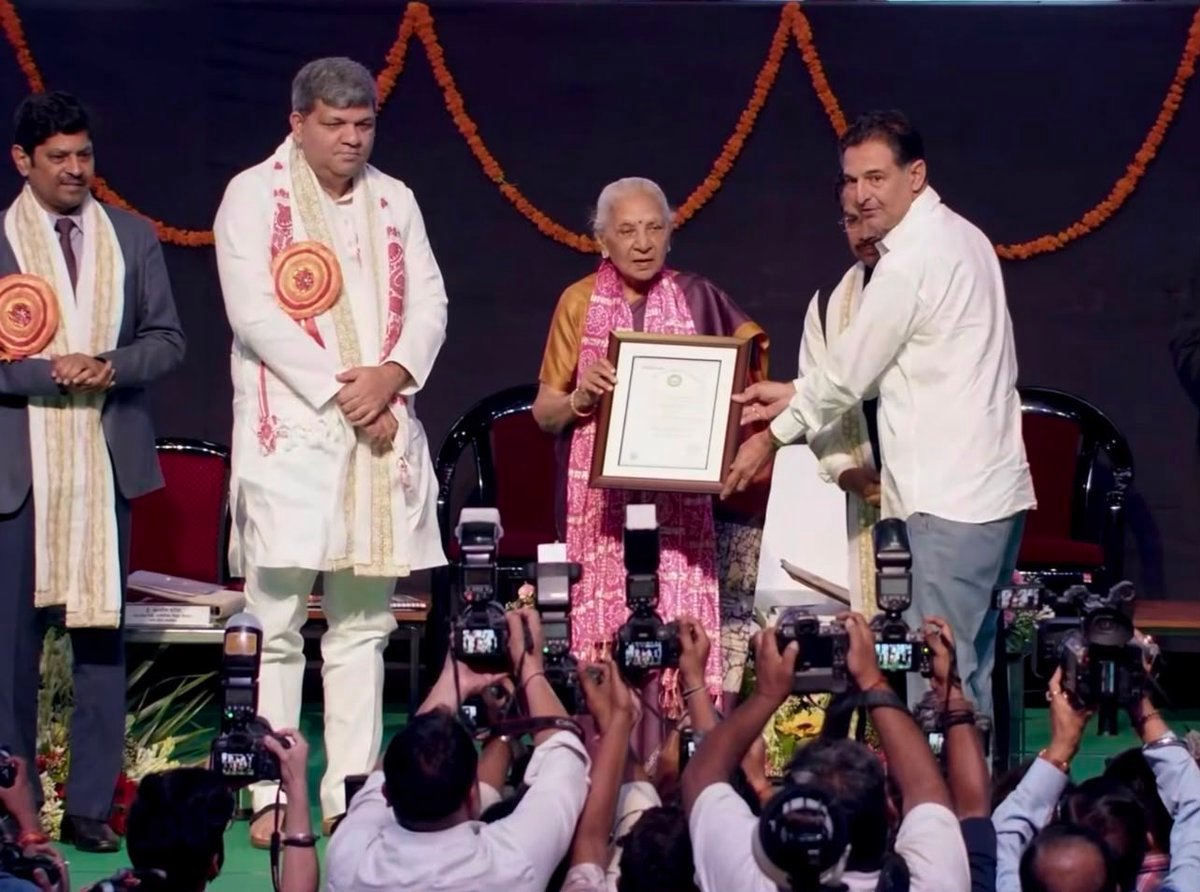
- Honorary D.Litt Degree (2026): Conferred an honorary Doctor of Literature (D.Litt) at the 24th convocation ceremony of Dr. A.P.J. Abdul Kalam Technical University, presented directly by Uttar Pradesh Governor Anandiben Patel for outstanding contributions to craft preservation.
- Geographical Indication (GI) Authorized User: Officially registered under GI Tag 718 for Kutch Rogan Craft (Registration No.
AU/35946/GI/718/1), guaranteeing authentic geographical origin and traditional integrity from his Madhapar workshop.
Sustaining the Future in Madhapar
Working from his family workshop in Madhapar, Dr. Ashish Kansara has transformed a traditional textile practice into a global fine-art medium. Beyond classical wedding textiles, his portfolio includes gallery wall pieces, framed canvases, and detailed portraits of Hindu deities. By conducting active workshops, teaching new apprentices, and welcoming visitors to witness the creation process, Dr. Kansara ensures that this 1,550-year-old masterpiece of human craftsmanship remains a vibrant, thriving art form.