India is a country full of religious traditions which have science and love for nature behind it. In many villages of India there are many religious activities carried out. Most of religious activities have the value of natural elements. Our ancestors were nature lovers. They followed many traditions, rituals and festivals. They worshipped trees, animals, birds, mountains, rivers and many natural elements. By following these activities as a tradition, now we understand the value of the activities. The worship of Snake God is the common religious activity in India and the world. Goga Pancham is celebrated as the religious tradition in many villages.
What is Goga Pancham
Goga Pancham is made from two words, Goga and Pancham.
Goga means the divine serpent God or serpent deities.
Pancham means the fifth day of bright fortnight (Shukla Paksha in Hindu calendar) or dark fortnight (Shukla Paksha in Hindu calendar).
People here in Virani village call Goga Dada (grandfather like respectful name) or Goga Maharaj (king like respect).
When Goga Pancham is celebrated
Goga Pancham is celebrated on the fifth day of Krishna Paksha of Ashadha (Hindu lunar month) month. In many villages of Kutch Gujarat Goga Pancham is celebrated. The tradition of Goga Pancham is years old and still celebrated with great trust and devotion. In Virani Moti village Goga Pancham is celebrated with great devotion to the divine snake god.
Goga Pancham worship and mythological stories
Goga Pancham is the religious tradition that celebrated in Ashadh month on the fifth day after full moon. This is the tradition to value the snake as they are the part of the environment. They are the friends of the farmers who saves crops from the rats. Goga Maharaj / Goga Dada is the God who saves the lives of the children and people from snake bite. There are many mythological stories about the snake god. As per one mythological legend our Mother Earth sits on the head of the Sheshnag (the great snake). The fight of Lord Krishna and Kalia Nag is very famous. We can see the black cobra coiled on the neck of Lord Shiva. We have many other names of snakes like Vasuki, Takshaka, Kaliya in Indian mythological stories. These stories states that we live in same environment and on the same Earth with other all creatures of nature. Recently the fossils of the giant snake were founded from the Kutch district. One mythological story of Bhujang Nag (the divine snake) is that the name of Bhuj is keep on the name of Bhujang Nag relates to Bhujio hill.
How to make Goga figure and where
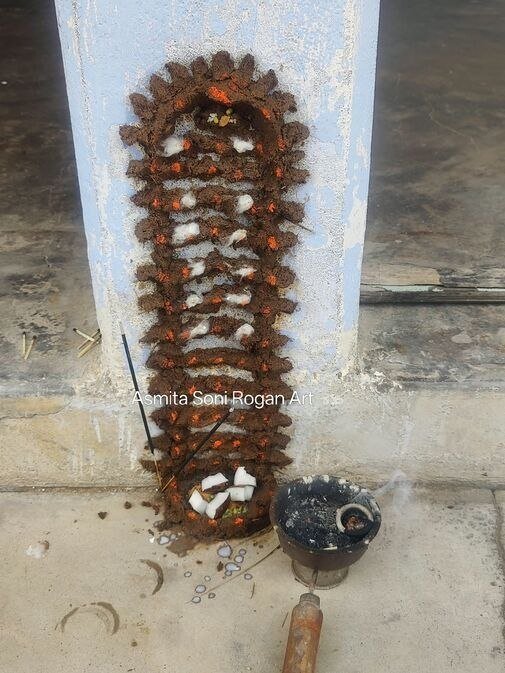
There are many different methods used by people to make Goga figure for worshipping. Some people make the figure of snake on the wall using cow dung, some people draw the figure of snake on the wall, some make cow dung bowl under the tree, some go to the temple of Goga Dada. The method can be different but trust is the same. In many villages of Kutch Gujarat the people make the figure of snake using fresh cow dung on their main doorsteps. Then the people use Sindoor, cotton seeds, cotton, flowers to give the shape and decorate the figure. The people do the individual worship at their home or the group of people do worship together at street or at temple of the Goga Dada. The people do the worship of Goga at their doorsteps and also make the fresh cow dung bowl shape in their home temple where they establish their home deities to worship Goga/ Nag Devta.
Goga Pancham worship rituals.
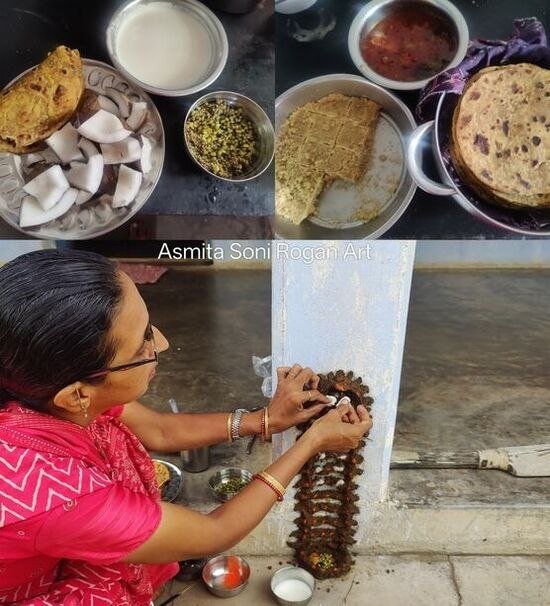
Goga Pancham worship rituals are very interesting and important for the people. The people not only worship the Goga Maharaj but also make the food the day before worship because on the day of Goga Pancham the people eat cool meal. So the women make the puri, thepla (local food items of Kutch Gujarat) like fried items and sweets on the day before Goga Pancham. They soak moong and millet overnight for offering prasad to Goga Dada. Then on the early morning the women of the house make the figure of Goga on the wall of the doorstep using fresh cow dung. Then they apply sindoor on the body of Goga Dada figure. At the end of the figure they make small bowl shape with cow dung, then offer milk, soaked moong and millet, fresh coconut pieces and prepared fried food in it. Then they do dhoop (fragrant incense), light ghee clay lamp, and aarti (prayer song) of Goga Dada. Most of the activities of the worship are carried by women. The elderly women tell the mythological story of Goga Dada to their new generations. Many women keep fast on the day of worship. The women don’t do needle work on that day. This is also a part of the traditional ritual relates with the worship of Goga Dada. Asmita Soni from Virani Moti, a Rogan Art artist with her family celebrates Goga Pancham with great dedication.
After worship rituals and environmental view on worship
Our ancestors had the environmental friendly view in religious activities. They took each step of their religious activities without harming the environment. The figure of snake either draw on wall or make figure of Goga Dada with using cow dung. Then they use soaked moong, millet, coconut, milk as prasad offer to Goga Dada. After the worship complete, on the next day when the figure of the Goga Dada dries, they flow it in flowing water or in small pond. How eco-friendly worsh activities of Goga Dada! Not any type of big show, no costly materials just simple devotion. This is the beauty of Indian traditional religious culture. As we know in season of monsoon, the snakes come out from their homes. So, in Indian culture we do Pooja of the divine serpent Goga Dada in monsoon season like Ashadh and Shravan (August and September), month seeking special protection from the snakes biting. In astrology there is the importance of the worship of the divine serpent to remove many Doshas.
Jay Goga Dada