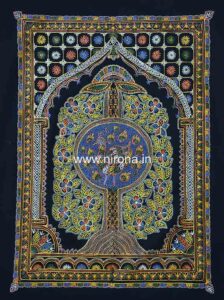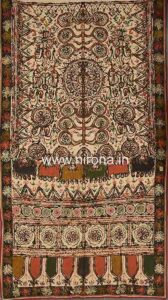
Rogan art painting is a rare and historically significant oil painting tradition from the Madhapar, Kutch region of Gujarat, India. Executed on fabric using a drying oil technique derived from castor oil and natural pigments, Rogan art is applied freehand with a metal or wooden stylus. The technique produces fine, raised lines and precise symmetrical compositions, distinguishing Rogan painting from other Indian art traditions.
History of Rogan Art Painting
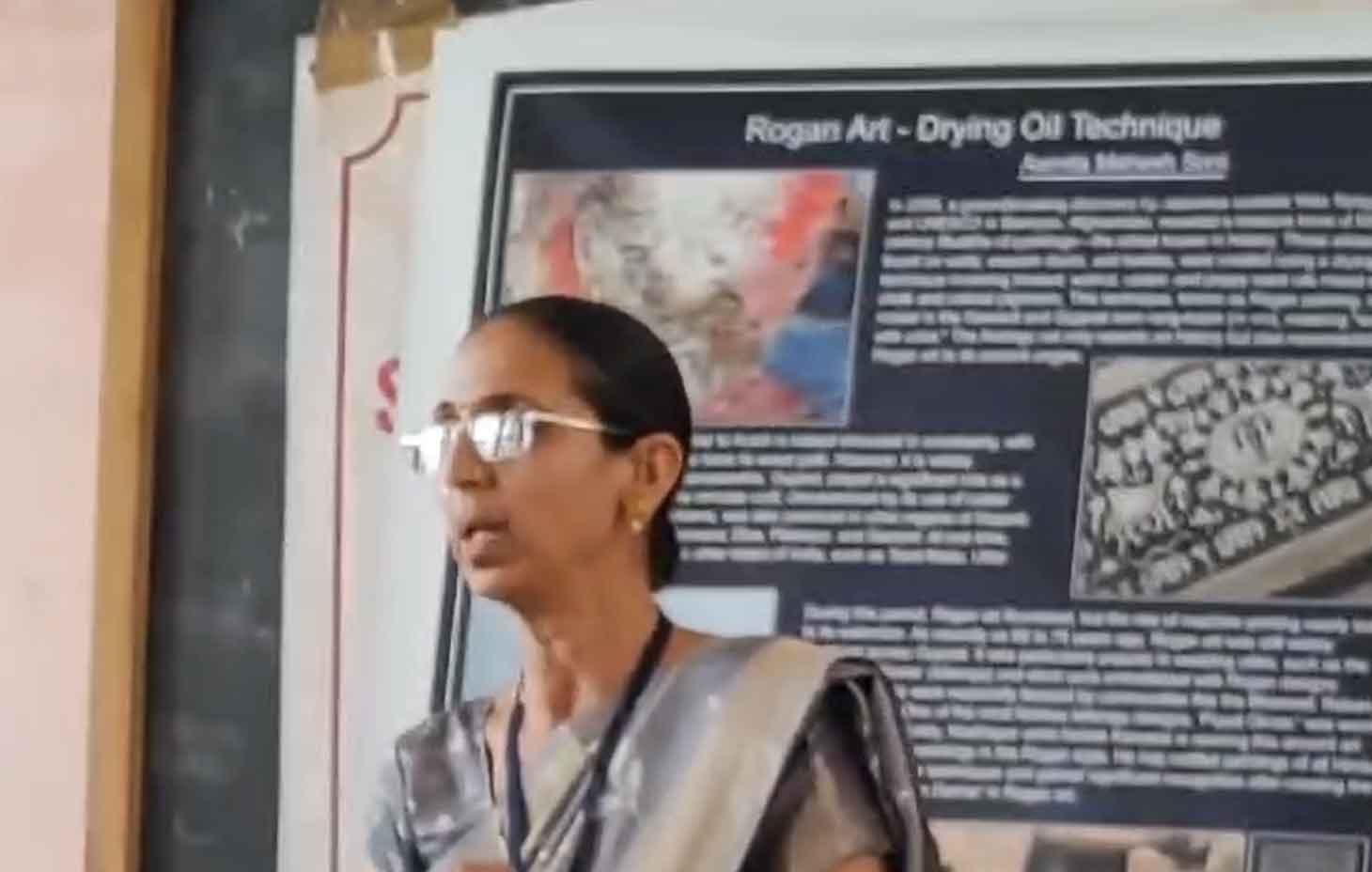
Rogan art painting represents a living continuation of an ancient oil painting tradition dating back approximately 1,550 years. Scientific research conducted in the early twenty-first century by UNESCO in collaboration with Japanese scientists brought global attention to early oil painting techniques in India. Through material analysis of Buddhist paintings discovered in the Bamiyan region, these works were dated to the fifth–sixth century CE, demonstrating the advanced use of drying oil media long before such techniques appeared in Europe.
The Rogan drying-oil technique shares fundamental technical principles with these early oil painting traditions, particularly the use of oil as a binding medium for natural pigments. Over centuries, this knowledge survived in the Madhapar, Kutch region of Gujarat, where it evolved into the distinctive Rogan art practice known today.
Preserved largely through oral transmission within artisan families, Rogan art remained undocumented for long periods. Its survival reflects the continuity of traditional knowledge and the cultural resilience of the communities that practiced it.
What Is Rogan Art Painting
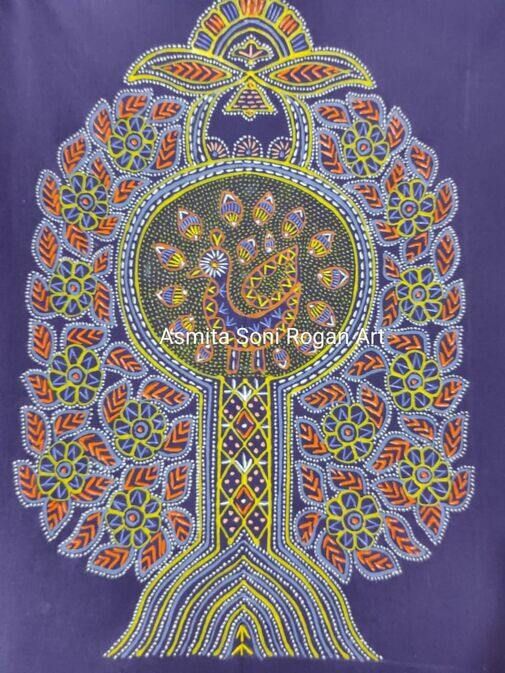
Rogan art is a handmade oil painting technique practiced by a small number of artisan families in Kutch like Ashish Kansara family. The artist works without brushes, stencils, or preliminary sketches, requiring exceptional control and experience. Each Rogan painting is unique, reflecting both individual mastery and a continuous artistic lineage.
Rogan Art Technique and Materials
The Rogan Drying-Oil Process
The preparation of Rogan oil is central to the technique. Castor oil is slowly heated over several days until it reaches a thick, viscous consistency suitable for painting. Natural mineral and vegetable pigments are then blended into the oil, creating a durable and expressive painting medium.
Tools and Application Method
Rogan art is executed on cotton or silk fabric using a metal or wooden stylus. Designs are often completed by folding the fabric to achieve perfect symmetry, a defining characteristic of traditional Rogan compositions. The paint remains slightly raised, giving the artwork a tactile and sculptural quality.
Traditional Rogan Art Motifs
Rogan art motifs draw inspiration from nature, symbolism, Hindu, Buddhism and regional cultural narratives. Common themes include the Tree of Life, floral patterns, birds, animals, and geometric forms. These motifs express ideas of continuity, balance, and interconnectedness and have remained consistent across generations.
Research and Documentation by Asmita Soni
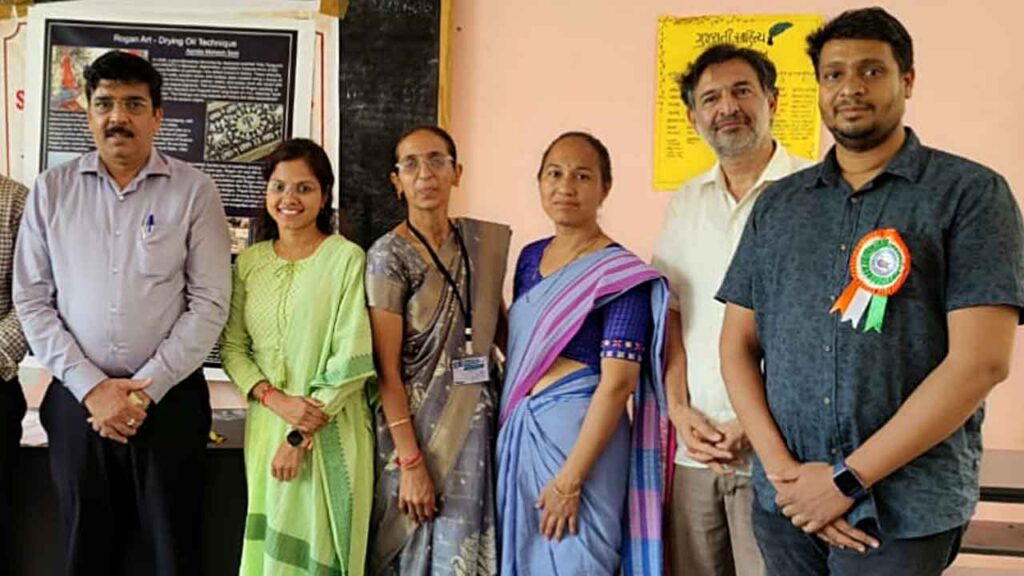
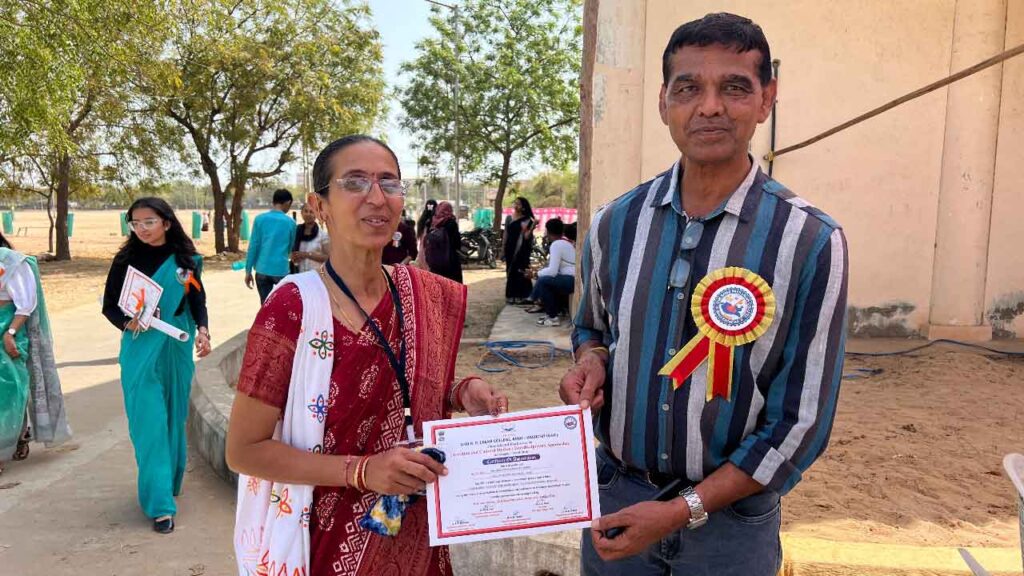
Asmita Soni’s contribution to Rogan art focuses on academic research, documentation, and cultural interpretation. Asmita Soni has presented research papers and formal documentation on Rogan art at Kutch University titled “Rogan Art Drying Oil Technique”, including detailed studies of Rogan Painting and master Rogan artist Ashish Kansara from Madhapar, Kutch.
Her research emphasizes the historical depth and technical complexity of the Rogan drying-oil technique, supporting its recognition as a significant oil painting tradition within both Indian and global art history.
Rogan Art Painting in the Contemporary Context
In the present day, Rogan art stands apart from mass-produced and digitally reproduced imagery. Each painting is entirely handmade and unrepeatable, embodying a slow, disciplined artistic process. Scholarly research and institutional documentation play a vital role in safeguarding this fragile tradition for future generations.
Cultural Significance of Rogan Art
Rogan art painting represents the cultural heritage and artistic continuity of Kutch. Through sustained practice, academic research, and museum presentation, Rogan art continues to be recognized as a living tradition that bridges ancient oil painting techniques and contemporary cultural preservation.