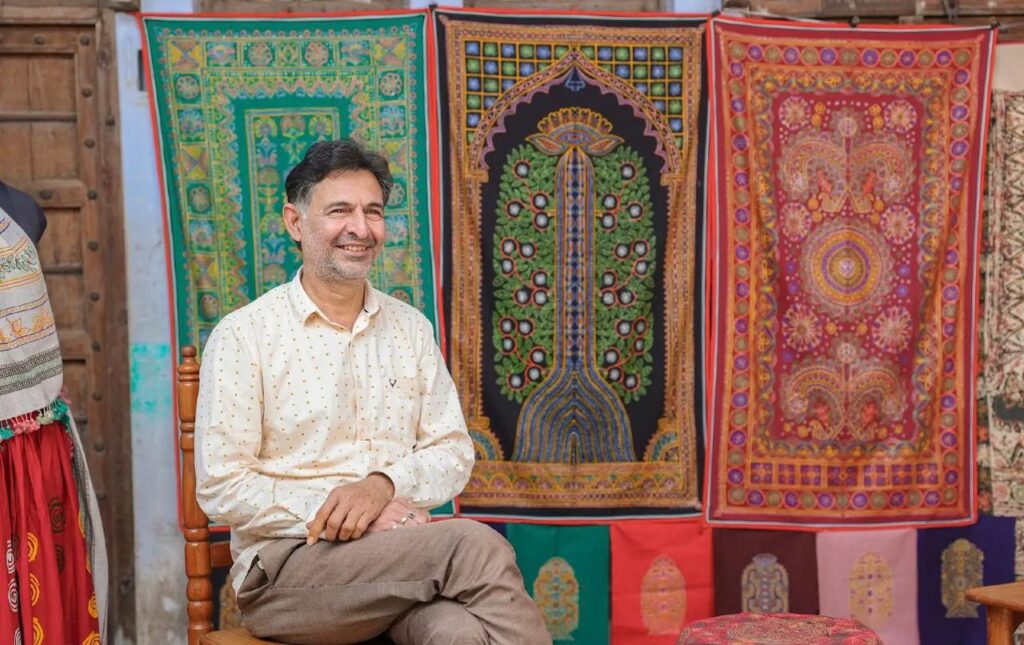
Exempt: Ashish Shantilal Kansara is a central figure in the survival of Rogan art, a 1,500-year-old tradition involving polymerized castor oil. As a legally recognized GI-authorized user, he is one of the few masters proficient in all three historical branches of the craft—freehand painting, mold printing, and embellished freehand. Residing in Madhapar, he and his wife, Komal, have trained over 130 women, ensuring the craft’s continuity and providing sustainable livelihoods for the local community.
The preservation of intangible cultural heritage within the Indian subcontinent represents a delicate equilibrium between historical continuity and contemporary relevance. Among the most enigmatic and structurally unique of these traditions is Rogan art, a textile painting technique characterized by its use of polymerized castor oil and natural pigments. Within this specialized field, Ashish Shantilal Kansara has emerged as a central figure, serving not merely as a practitioner but as a primary custodian and innovator who has navigated the craft through periods of near-extinction to its current status as a symbol of Indian cultural diplomacy. Based in the village of Madhapar, near Bhuj in the Kutch district of Gujarat, Kansara’s professional trajectory offers a nuanced case study in how traditional artisans adapt to systemic shocks—such as natural disasters and the influx of machine-made textiles—while expanding the iconographic and social boundaries of their heritage.
Historical and Etymological Origins of the Rogan Tradition
The term Rogan finds its linguistic origins in the Sanskrit word rangan, signifying the act of adding color, dyeing, or coloring. This etymological root underscores the craft’s fundamental nature as a medium of transformation where raw oil is converted into a vibrant, tactile paste. While modern Rogan art is deeply associated with Kutch, its historical arc is significantly more expansive, tracing back over 1,550 years. Research conducted by UNESCO and Japanese scientists has uncovered evidence of similar oil-based painting techniques in the Bamiyan Buddhist caves of Afghanistan, dating between the 5th and 8th centuries. This discovery suggests that the progenitors of the craft were likely disciples of the Buddha from Bihar who migrated through Silk Road corridors, eventually settling in Western India.
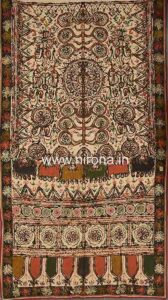
As the craft settled in Gujarat, it became a vital component of the social and ceremonial fabric of pastoral and agricultural communities. Traditionally, Rogan art was employed to decorate the wedding trousseaus of the Bharavad, Rabari, Ahir, and Patel communities. These groups utilized the vibrant, raised patterns of Rogan painting to adorn Chanias (long skirts) and saris, creating textiles that served as both aesthetic masterpieces and indicators of cultural identity. The migration of the Kansara community into the Kutch region solidified the craft as a hereditary legacy, safeguarding the technique through generations of familial transmission.
Chronological Development of the Rogan Craft
| Period | Significant Milestone | Contextual Significance |
| 5th – 8th Century | Emergence of oil painting in Bamiyan | Connection to Buddhist disciples and Silk Road trade. |
| 14th – 18th Century | Settlement in Western India | Integration into Gujarati wedding traditions. |
| 1975 | Birth of Ashish Shantilal Kansara | Beginning of the modern revival lineage in Ahmedabad. |
| 1994 | Entry into Professional Practice | Ashish Kansara starts working with traditional lehengas at age 19. |
| 2001 | Bhuj Earthquake | Massive decline in demand; temporary professional hiatus begins. |
| 2006 | Strategic Revival | Returns to the craft with diversified modern products. |
| 2019 | Diplomatic Recognition | Presentation of “Shree Raja Ram Darbar” to Prime Minister Modi. |
| 2021 | Awards | Vidisha Craft Award for revitalization of Rogan art. |
The Biographical Context of the Kansara Lineage
Ashish Kansara was born in 1975 in Ahmedabad, Gujarat, into a family whose identity was intertwined with the Kansara community—a group traditionally associated with metalworking and known as the “Guardians of the Sacred Metal”. His grandfather, Jamnadas Vastaram Kansara, was an accomplished artist in his youth, practicing the traditional Rogan technique. However, the economic pressures of the mid-20th century forced a transition in the family’s professional focus. Jamnadas eventually took a position in a textile mill in Ahmedabad, a move emblematic of the broader displacement of traditional artisans during India’s industrialization. Ashish’s father, Shantilal Jamnadas Kansara, further distanced himself from the craft out of necessity, working as a rickshaw driver until his passing in 2004.
Despite this professional divergence, the latent heritage of the family remained accessible to Ashish. His formal education took place at the Meghdoot Vidya Vihar Gujarati Medium School, but his path was altered in the 10th grade following a fortuitous encounter with an All India Radio interview discussing the intricacies of Rogan art. This broadcast served as a catalyst, prompting Ashish to leave school and dedicate himself to the mastery of his grandfather’s nearly forgotten craft. His training was dualistic, combining the hereditary knowledge of Jamnadas Vastaram Kansara with professional instruction under Ashok Bhai, Gujarat. This period of apprenticeship culminated in 1994 when, at the age of 19, Ashish began his professional journey, initially focusing on traditional garments for nomadic tribes.
Material Science and Technical Methodologies
The technical sophistication of Rogan art lies in its medium—a specialized castor-oil-based paste that functions as a “liquid thread.” The production process is a meticulous exercise in chemistry and heat management. Castor oil is boiled for approximately five to six hours (and sometimes up to 12-48 hours) until it undergoes thermal polymerization, transforming from a fluid into a malleable, translucent gel. This base is then blended with natural pigments and occasionally chalk powder to achieve the desired opacity and vibrant hues of blue, green, yellow, and orange.
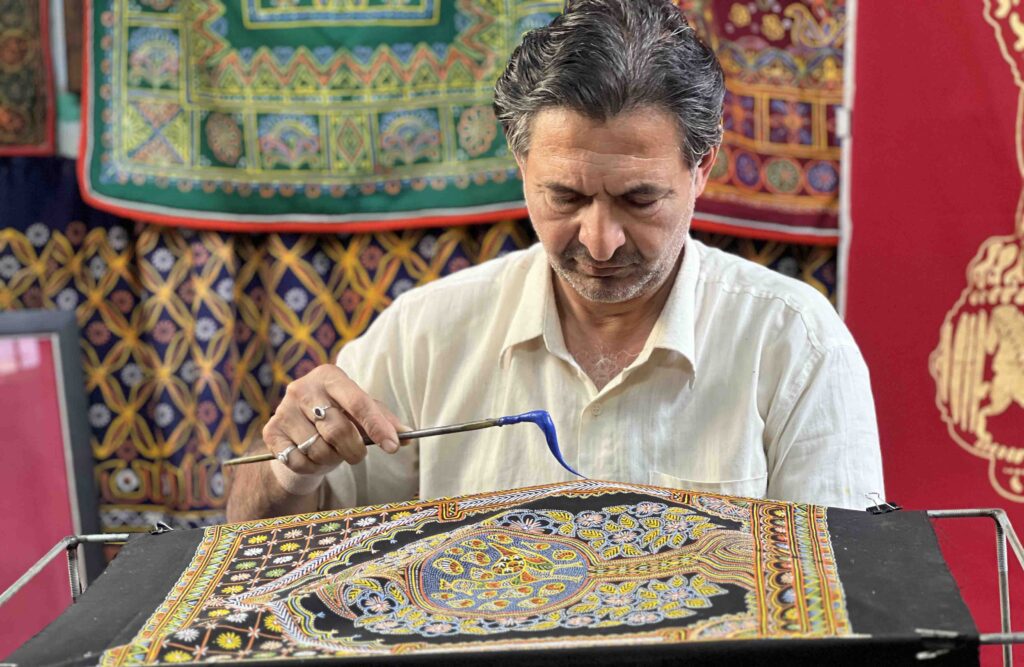
The application process departs fundamentally from conventional painting. Instead of a brush, the artisan utilizes a thin metal stylus (tulika) to pull the paste into fine, elastic threads. These threads are guided through the air onto the fabric, allowing the artist to create patterns without the stylus ever making direct contact with the cloth. A hallmark of the traditional style is mirror imaging: the artist paints one half of a design, then folds the fabric while the paste is still wet, transferring a perfectly symmetrical image to the opposite side.
Technical Inventory of the Rogan Workshop
| Tool/Material | Function and Significance | Origin/Source |
| Castor Oil Gel | The polymerized base (Rogan) providing adhesion and elasticity. | Natural Castor Seeds |
| Stylus (Tulika) | A metal or wood rod used to pull the paint into threads. | Traditional Crafting |
| Biba (Brass Molds) | Used for the rare “Rogan Chhap” or printing technique. | Brass Metalwork |
| Natural Pigments | Mineral-based colors providing intense, non-fading hues. | Earth and Minerals |
| Chullah/Sagadi | Traditional furnace used for the high-heat boiling process. | Ceramic/Stone |
The 2001 Bhuj Earthquake and Professional Adaptation
The catastrophic earthquake of 2001 in Bhuj, Kutch, represented a seismic shift in the socioeconomic landscape for regional artisans. For Ashish Kansara, the disaster resulted in a complete cessation of demand for traditional Rogan-painted garments. The pastoral communities that formed his primary customer base were devastated, and their resources were redirected toward survival rather than ceremonial luxury. Simultaneously, the market was increasingly inundated with cheap, machine-printed fabrics that mimicked traditional motifs.
During this period of forced hiatus, Kansara demonstrated resilience by seeking alternative employment to sustain his family financially. For several years, he temporarily set aside his art to work in photography and take up roles in various private offices. This period was a necessary strategic diversion to ensure economic stability before the craft could be revived.
Innovation and the Sacred Pivot
In 2006, Kansara returned to Rogan art with a redefined strategic vision. Recognizing that the survival of the craft depended on its relevance to a broader, modern audience, he expanded the repertoire of Rogan applications. He moved beyond traditional wedding attire into a diverse range of lifestyle products, including home decor, wall pieces, wallets, kurtas, and blouses.
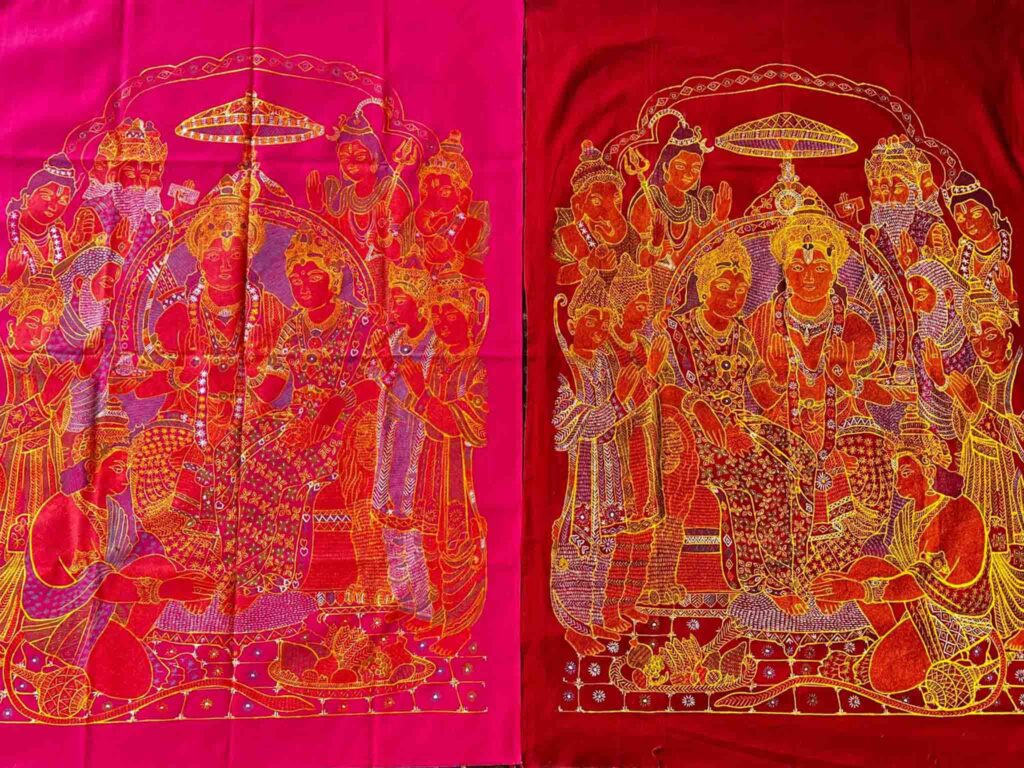
The most profound innovation introduced by Ashish Kansara was the integration of religious iconography and portraiture into a tradition that had historically been restricted to abstract and nature-inspired motifs. Kansara began creating stunning portraits of deities, a feat previously unseen in the Rogan medium due to the difficulty of rendering figurative detail with liquid oil threads.
Iconographic Expansion and Subject Matter
| Category | Subjects and Motifs | Cultural Context |
| Hindu Deities | Shri Rama, Krishna, Ganesh, Shiva Parvati, Radha Krishna, Hanuman. | Popular for domestic shrines and wall art. |
| Jain Iconography | Shri Mahavir. | Catering to the significant Jain community. |
| Islamic Themes | The Kaaba. | Painted for the Muslim community to ensure inclusive heritage. |
| National Icons | Tirupati Balaji, Swaminarayan. | High-demand pieces for cultural diplomacy and gifts. |
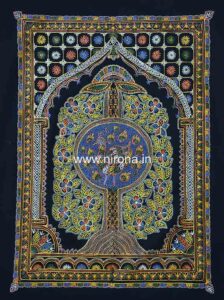
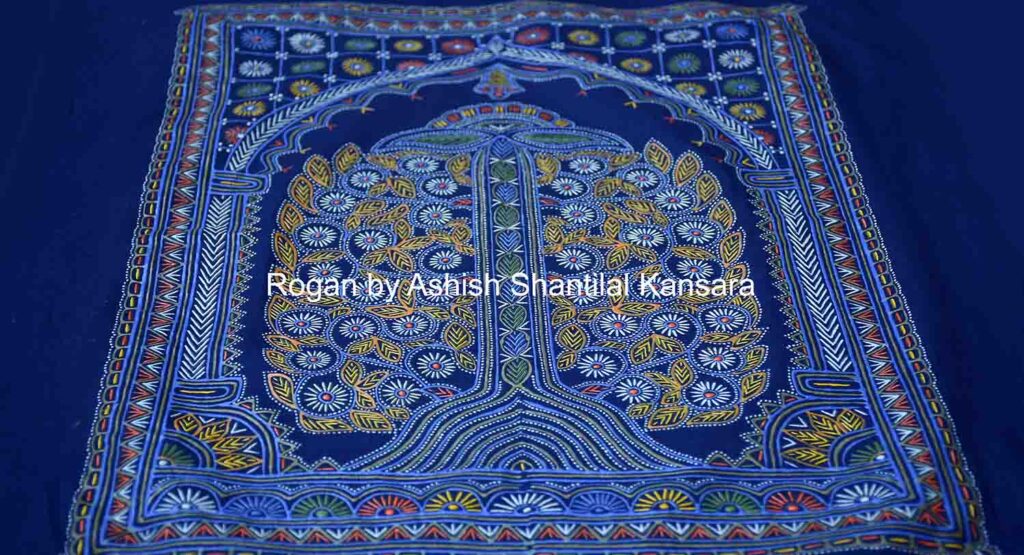
| Traditional Nature | Tree of Life, Popat Girnar (Parrot), Floral Tapestry. | Preservation of 200-year-old traditional designs. |
Kansara’s masterpiece, the Shree Raja Ram Darbar, serves as the pinnacle of this figurative evolution. The complexity of depicting divine features using the Rogan stylus requires immense precision and hand-eye coordination. This innovation has been credited with revitalizing international interest in the craft, transforming it from a decorative textile finish into a medium for sacred silk painting.
Geographical Indication (GI) and Triple Technical Mastery
Ashish Kansara’s status as a master artisan is formally recognized by the Government of India. He is a legally authorized user of the Geographical Indication (GI) Tag for Kutch Rogan Craft (Authorized User Number: AU/35946/GI/718/1). This designation ensures the authenticity of his work and protects the traditional knowledge systems of the Madhapar village.
Kansara is distinguished as one of the few practitioners globally who has attained proficiency in all three historical branches of the craft:
- Rogan Painting (Freehand): The traditional “liquid thread” technique used for intricate designs like the Tree of Life.
- Nirmika Rogan Chhap (Mould Printing): A rare method using hand-carved brass molds (Biba) to apply Rogan paste to fabric, vital for larger textiles like sarees.
- Varnika Rogan Chhap (Embellished): A decorative style that integrates traditional Rogan designs with additional elements like mica (abrakh) or glitter to provide a luxurious, shiny finish.
The Madhapar Collective and Social Transformation
A critical component of Ashish Kansara’s legacy is his commitment to social empowerment. Historically, Rogan art was a closely guarded secret, often passed only through male members of specific families. Kansara, alongside his wife Komal Kansara, actively dismantled these barriers.
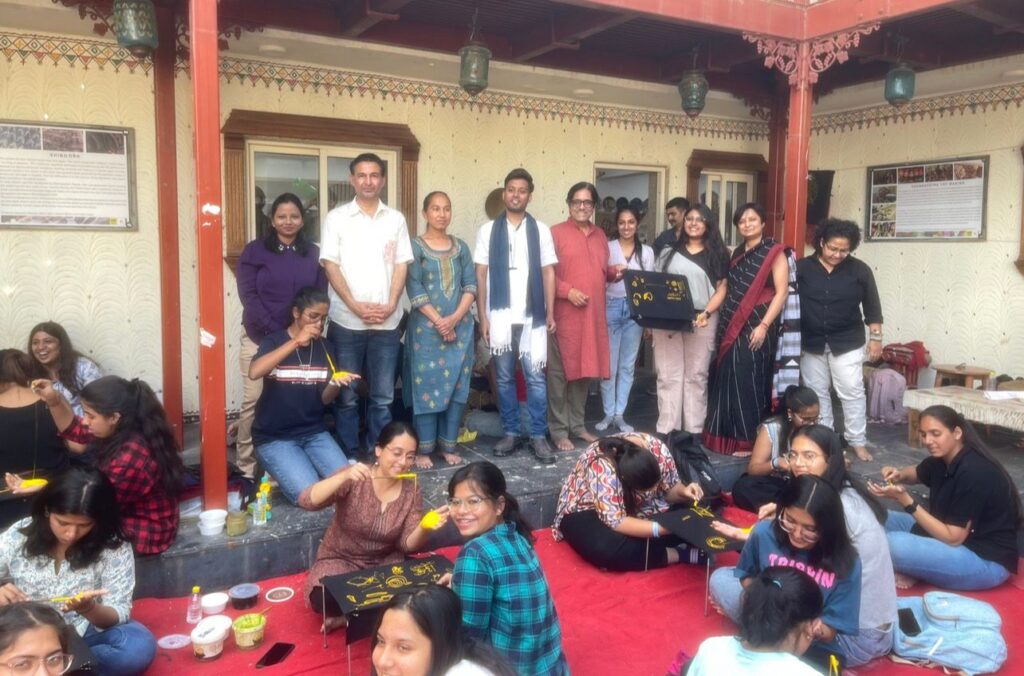
In the village of Madhapar, the couple established a training centre that has educated approximately 130 women in the methods of Rogan painting. This initiative has provided these women with a sustainable livelihood while creating a broader base of practitioners to ensure the craft’s survival. This collective effort has effectively turned Madhapar into a primary hub for Rogan art, complementing the traditional centre in Nirona.
Institutional Recognition and Global Diplomacy
The elevation of Rogan art to a symbol of Indian cultural diplomacy is largely due to the visibility provided by national leadership. Ashish Kansara has received multiple accolades that validate his efforts in preserving and modernizing the craft.
- Craftcentres Winner Award (2019): For excellence in mastering traditional techniques.
- Vidisha Craft Award for Artists (2021): Recognizing his role in revitalizing the craft after the earthquake.
- Craftcentres Fashion Week (2021): Highlighting the integration of Rogan art into contemporary fashion through collaborations with designers in RAKT fashion shows.
The diplomatic significance of the Kansara family’s work reached a zenith when Komal Kansara gifted the Shree Raja Ram Darbar painting to Prime Minister Narendra Modi in 2019. Rogan art pieces have since become frequent gifts from the Indian government to international heads of state.
Market Dynamics and Contemporary Product Landscape
The contemporary market for Rogan art has transitioned from a local necessity for pastoral tribes to a premium heritage product. Ashish Kansara’s online presence and participation in craft events have created a structured catalog of authentic Rogan pieces.
Sample Product Valuation and Category Analysis
| Product Identifier | Description | Material/Technique | Market Positioning |
| RA124 | Peacock Paradiso Bird Motif | Rogan painting on dark fabric | Heritage Wall Art. |
| RA123 | Bloom of Kutch Floral Tapestry | Intricate floral patterns | Home Decor. |
| RA122 | The Eternal Roots | Tree of Life (Kalpvriksha) | Symbolic Cultural Piece. |
| RA121 | The Liquid Thread | Abstract Rogan wall hanging | Contemporary Art. |
| Saree/Lehenga | Bhujodi Saree with Rogan | Fusion of weaving and painting | Luxury Fashion. |
| Accessories | Rogan Wallets and Blouses | Practical everyday items | Modern Lifestyle. |
The integration of Rogan art onto Bhujodi sarees represents a significant cross-community collaboration. The Vankar weavers of Bhujodi provide the handwoven cotton and silk canvases upon which Kansara applies his designs, encapsulating multiple layers of Kutch’s craft heritage.
Conclusion
Ashish Shantilal Kansara represents the modern archetype of the artisan-entrepreneur—a figure who honours the technical rigors of an ancient tradition while innovating to meet contemporary demands. His journey through the displacement of Ahmedabad, the apprenticeship under his grandfather, and the systemic shock of the 2001 earthquake reflects the characteristic resilience of the Kutch artisan. By mastering all three historical branches of the craft and democratizing knowledge through the Madhapar collective, Kansara has ensured that Rogan art remains a living, breathing tradition that serves as a bridge between India’s ancient cultural heritage and the global marketplace.