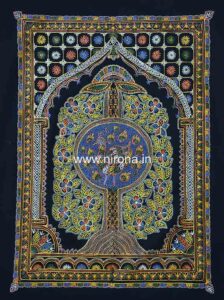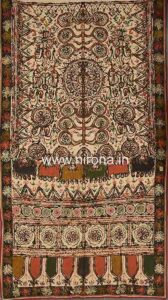
Our Indian land has an ancient history more than 5000 years old. The world’s biggest epic the Mahabharata is the gift of Indian Culture. The Geeta is the best philosophical book among the world’s literature. In our Indian scripts there were mentions of 64 Arts. The painting is our traditional, unique and historical art form. Rogan painting Kalpavriksha is the symbolic medium to imitate the aesthetic beauty of nature. It represents the whole nature in an artistic way.
Kalpavriksha meaning
Our ancestors were lovers of nature and worshipped nature. As described in Indian mythological scriptures Kalpavriksha means the divine tree that gives the boon. In fact the creation of the vegetation/trees is the biggest boon for mankind. It represents religious, mythological values as well as philosophical and scientific values. Its other meanings are WishTree/ BodhiTree/Tree of Life.
Rogan painting Kalpvriksh

Rogan painting Kalpavriksha is directly inspired by nature itself. The Kalpavriksha stands for the desires of human nature that can be filled by nature only. Rogan artisans who are inspired by nature try to copy nature in an artistic manner. They make Kalpavriksha in Rogan painting through which men can ask their wishes. From starting to finishing the Rogan work piece artisans use the skill, control and patience to make every piece natural.
The images of the Sun in Kalpvriksh
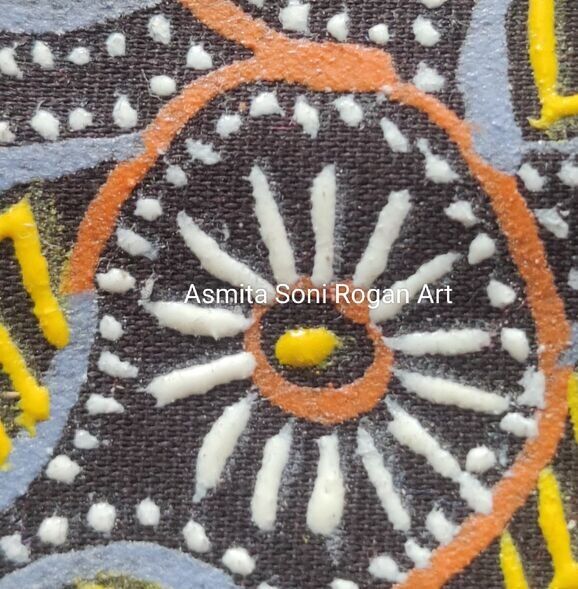
The sun is the main source of energy on the earth. The Sun of Kalpavriksha in Rogan painting shines through the branches. We can even see the many images of the sun which lights filter from the branches. The artisans of Rogan Art represent the images of the sun as the power that gives the energy. Artisans also make the sun that spreads the rays in all directions.
Leaves in Rogan painting as in nature
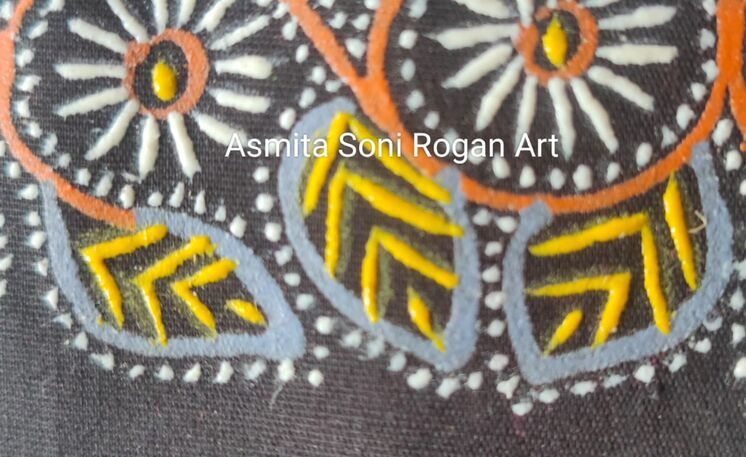
How the artisans in Rogan painting deeply observe the natural elements!! When the artisans make the leaves they also make smaller lines of other colour to show the veins of the leaves as naturally present in the leaves of a tree. Artisans also choose the different types of leaves to copy the variety of plant-leaves.
White innumerable dots present infinity of nature
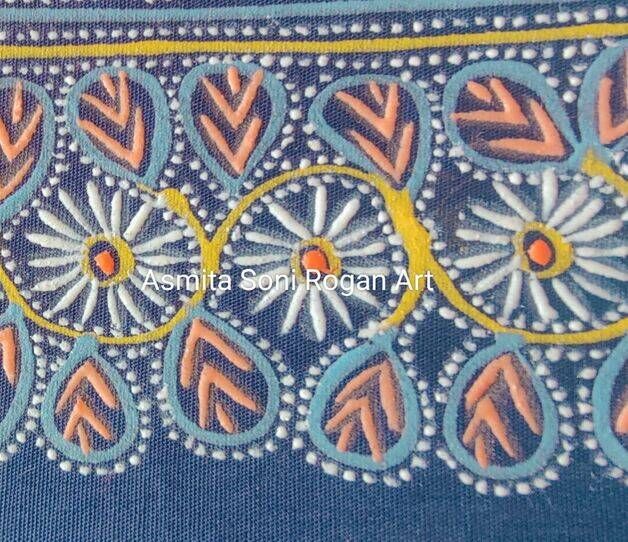
In the Rogan painting the artisans mostly use the white colour tiny dots surrounding the whole design of the tree. The artisans want to show the tiny water droplets that the tree is absorbing and releasing both. They decorate the Kalpavriksha with tiny white dots to create the environmental beauty.
These dots also present an infinite creation of God and Nature. One can never find the exact number of creation of nature. In Rogan painting tiny uncountable dots stand for innumerable varieties of tiny creatures of nature.
Roots of Kalpvriksh

We know that the roots of the tree are below the soil and absorb the nutrients and water and transport it to all parts of the tree. In Rogan painting when they make the roots of Kalpavriksha that symbolises the connection of earthen elements with the tree. Tiny white dots in the roots values the continuity of the water and nutrients go upside the earth. The artisan shows the connection between earth and heaven.
Kalpvriksh – symbol of regenerate
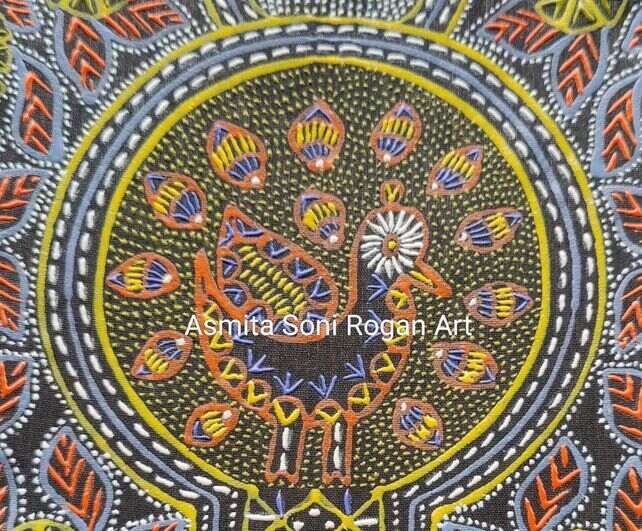
The Kalpavriksha is known as the divine tree that fulfils the desires of mankind. Commonly the coconut tree is known as Kalpavriksha due to its multi-usefulness. Artisans of Rogan painting make the different design flowers and fruits in Rogan painting. The artisans create new designs, colourful flowers, birds and animals in their paintings. This creation symbolises the whole nature that has the power of regeneration. If a man takes care of mother nature she has the power to recreation. The artisans create different designs in Kalpavriksha to value nature. This is their own way to present their thoughts in an artistic way.
The colours of Rogan painting Kalpvriksh
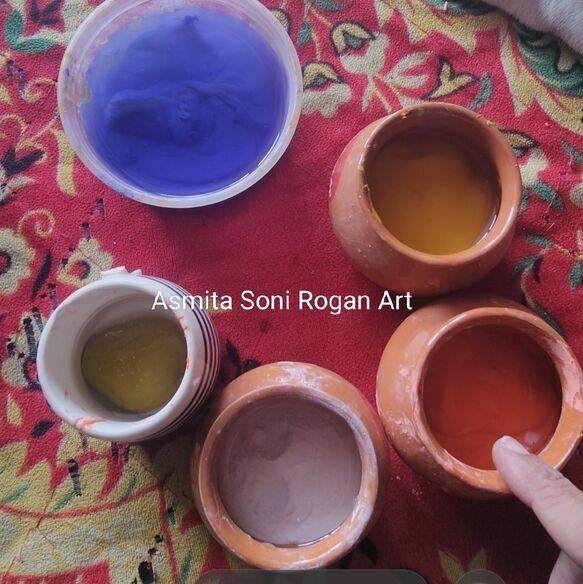
The colours of Rogan painting Kalpavriksha is very unique and natural. The colours of Rogan are inspired by nature. The main five colours of Rogan painting orange, yellow, blue, green and white are inspired from nature. These colours have their own energy and significance.
Rogan painting’s environmental values
Ashish Kansara explores the Rogan painting Kalpavriksha with the traditional, religious point of view. Holding his years old paternal heritage art, he is the master of the three styles of Rogan Arts. He creates God and Goddesses in Rogan painting with the Kalpavriksha. He is also inspired by Buddha’s painting of Bamiyan. He creates Lord Buddha sitting under the Bodhi Tree/Kalpavriksha in Rogan painting. His every Rogan painting inspires the people to understand the traditional heritage art.
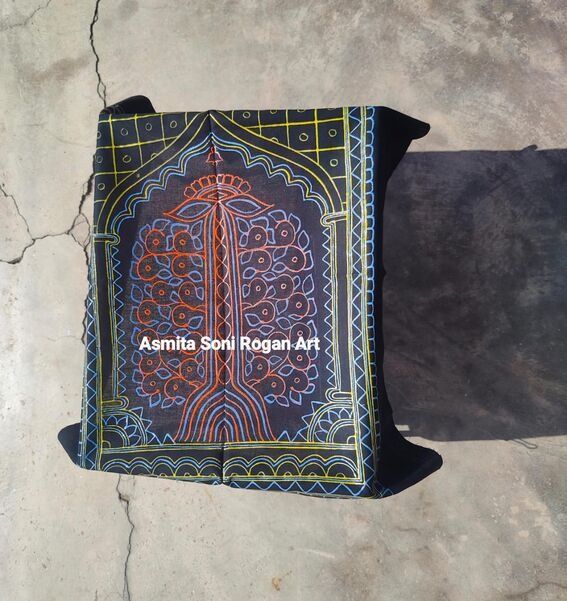
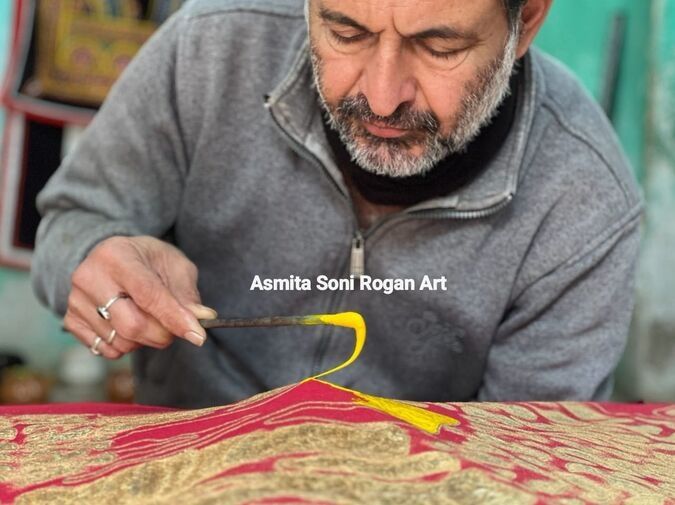
Rogan painting is a unique style of painting. This uses a drying oil technique which is 1550 years old ancient art used by Buddha’s disciples. No chemicals, no machines, no sketches, no mass production in Rogan painting. Artisans use the boiled castor oil paste as a raw material which has the special property of drying when exposed to air. Artisans of Rogan Painting use sunlight for drying the art piece. It takes long hours but artisans wait for dry naturally. Rogan painting is completely hand made art. It depends on nature from paint to dry the piece.
Softness and firmness present together
Rogan painting Kalpavriksha presents the softness and firmness both together. When a plant starts to grow, its sprouts are very tender and soft, as time passes the roots spread and grow firmly. In Rogan painting, the artisan uses the very soft paste of boiled castor oil. When the artisan completes the painting and it keeps under sunlight, this soft sticky paste changes into a firm structure that can last for a long period.
The artist’s way of gratitude nature
The Rogan artists are inspired by natural elements so, it is the way of their gratitude to nature through their arts. Rogan painting Kalpavriksha presents nature in a unique artistic way. The Rogan artists work with hand, mind and heart. They also make different designs of Kalpavriksha with birds, animals and humans.
Ashish Kansara’s traditional creation in Rogan painting Kalpvriksh
Let’s copy the nature
to save our future.